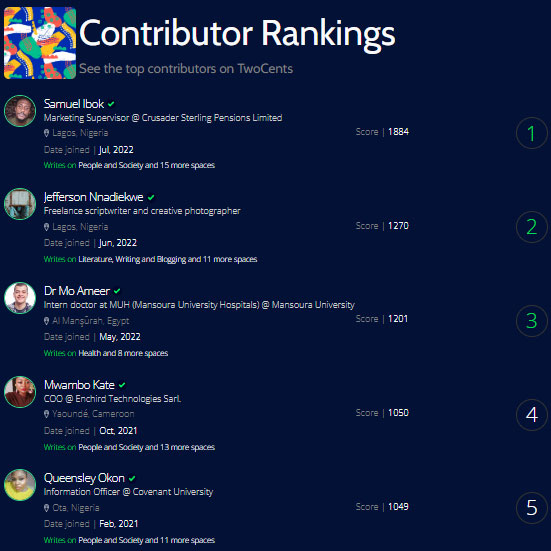
Share ideas & stories. Join a global community. Earn from your content.
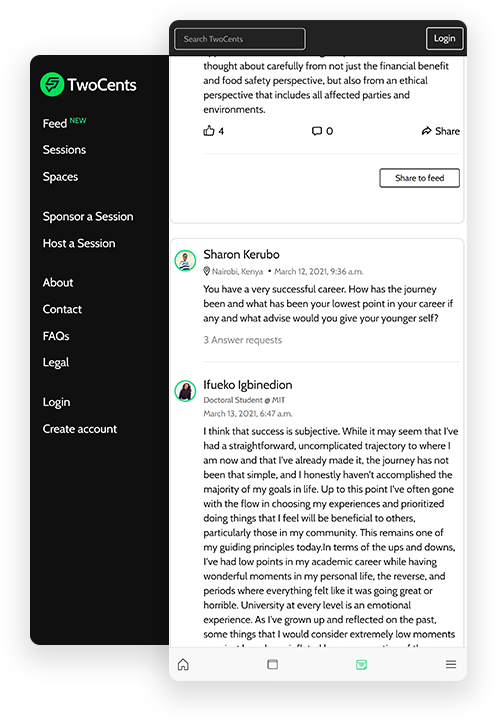
Insight screenshot on TwoCents
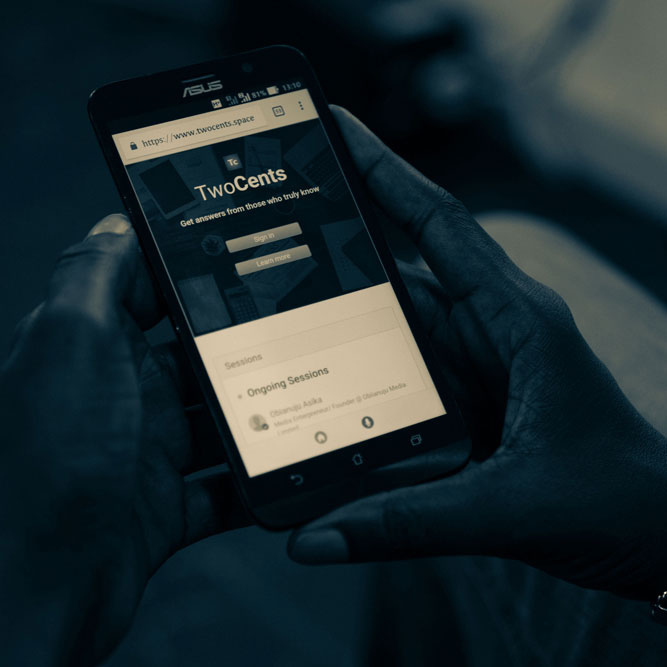
TwoCents is a community & content marketplace for Africans around the globe.
See more
Perks
Beyond the great content, global community and earning opportunities, TwoCents offers so much more.

Points-to-Coupons
Engage with content. Earn points. Spend your points


Referral Earning
Earn cash when people join TwoCents with your referral link.


Monthly Community Prizes
Every month, we award cash prizes to community members with the best content, most engaged content etc.


Competitons & Flash Contests
TwoCents hosts a range of essay competitons, mini-competitions (flash contests) — You may also host your own contests on TwoCents!


Earning
Earn in multiple currencies from your content through tips, subscriptions and ad revenue.
publish on TwoCents Create
Publish high-quality, compelling, insightful content from your expert knowledge, career, and unique life experiences.

share on TwoCents Share
Share your posts in your networks and circle. Develop an indepth understanding of who your readers and listeners are.

earn on TwoCents Earn
Monetize your content through cash tips and subscriptions.
earn on TwoCents
monetize on TwoCents Monetize your insights.

Earn on TwoCents by publishing
high-quality insights.

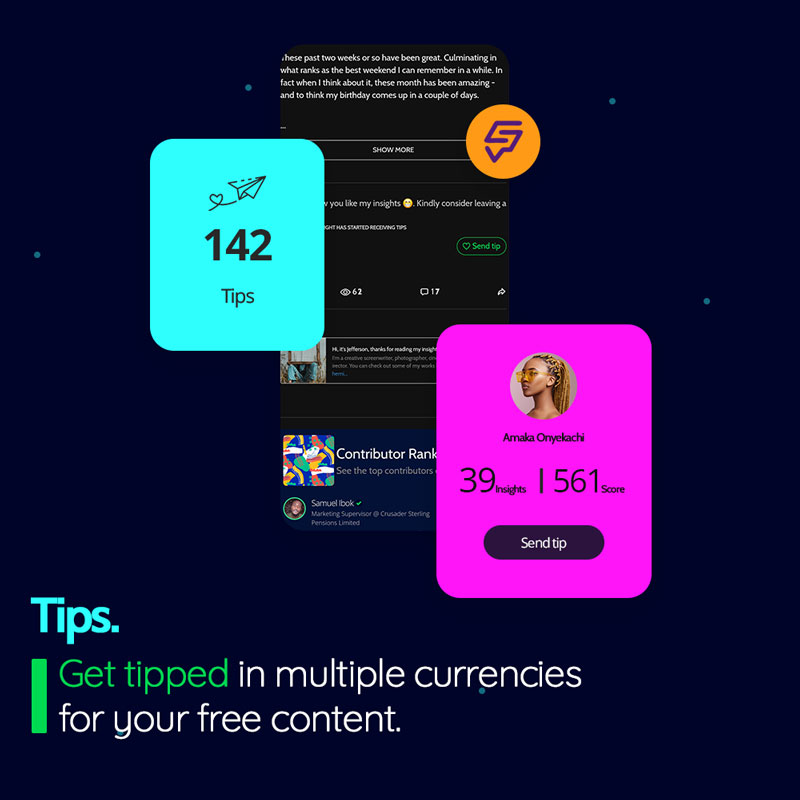
Tips

Get tipped for your
free content.

tips on TwoCents
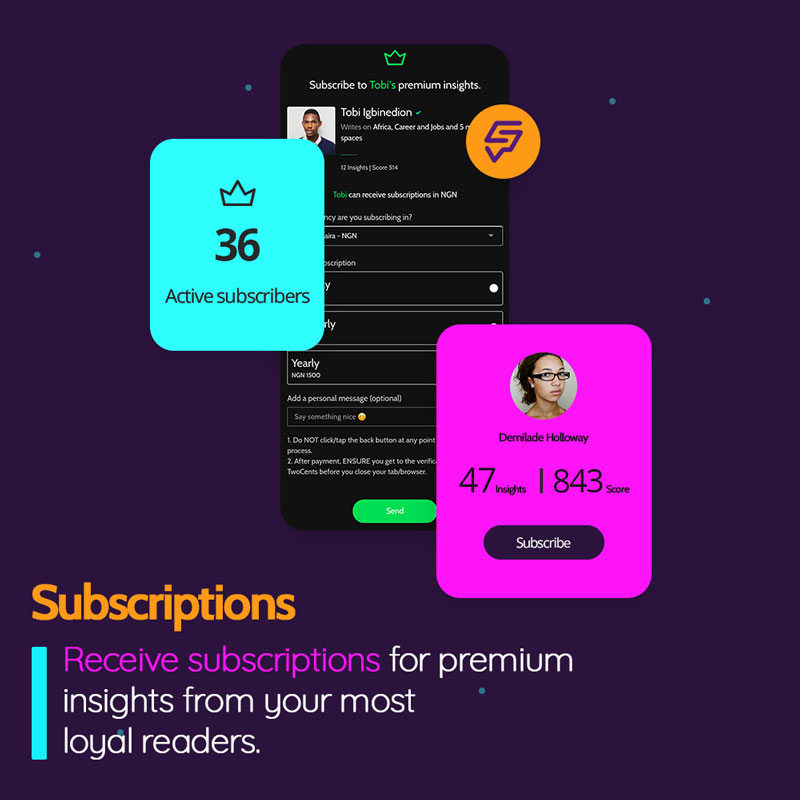
subscriptions on TwoCents
Subscriptions

Receive subscriptions for high-quality,
premium insights.

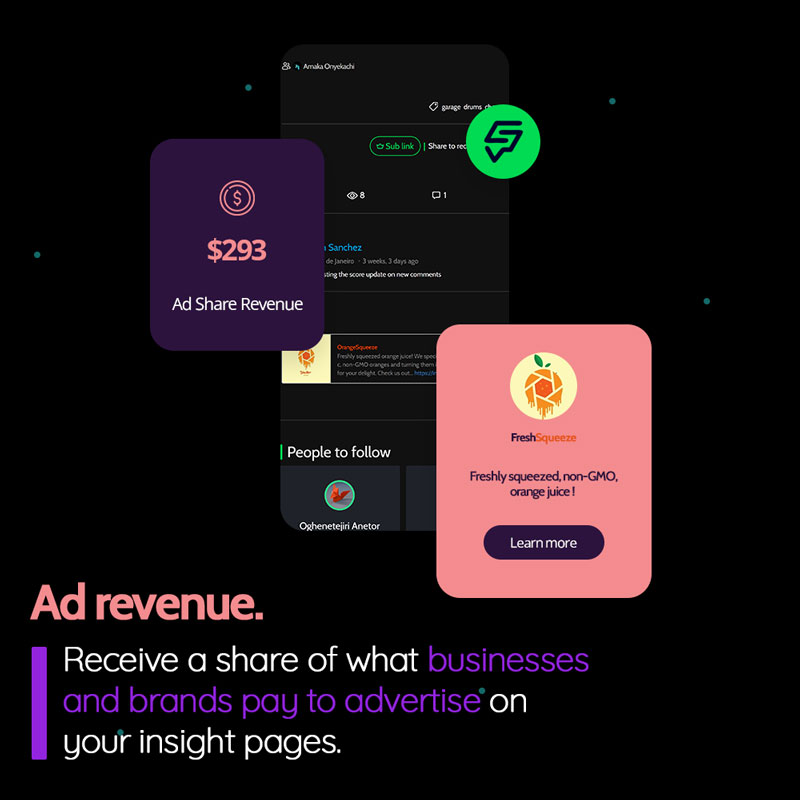
Ad revenue

Receive a share of what businesses & brands pay to advertise on your insight pages.

ad revenue on TwoCents
publish on TwoCents 5000+
Insights
earn on TwoCents ₦ 3M+
Contributor Earnings
engagement on TwoCents 400,000+
Insight Interactions
Audio Content
Upload recordings, add music🎵 to your posts — give your audience an amazing listening experience.
Listening is the new Reading

Turn your readers into Listeners.

audio avatar on TwoCents
Leaving the underground
By Joshua Omoijiade
0:00 / 0:00
NIGERIA IS NOT SAFE
By Emetekefe Akpovwovwo
0:00 / 0:00
Share your voice

Add recordings, voice notes, music etc to your insights

AI-powered features
Leverage AI to generate audio and images for your content — meet AMINA, our resident bot😎
Meet Amina

Amina is powered by the best AI models available.

She'll answer your questions, comment on your insights, find trends in your content, and much more.
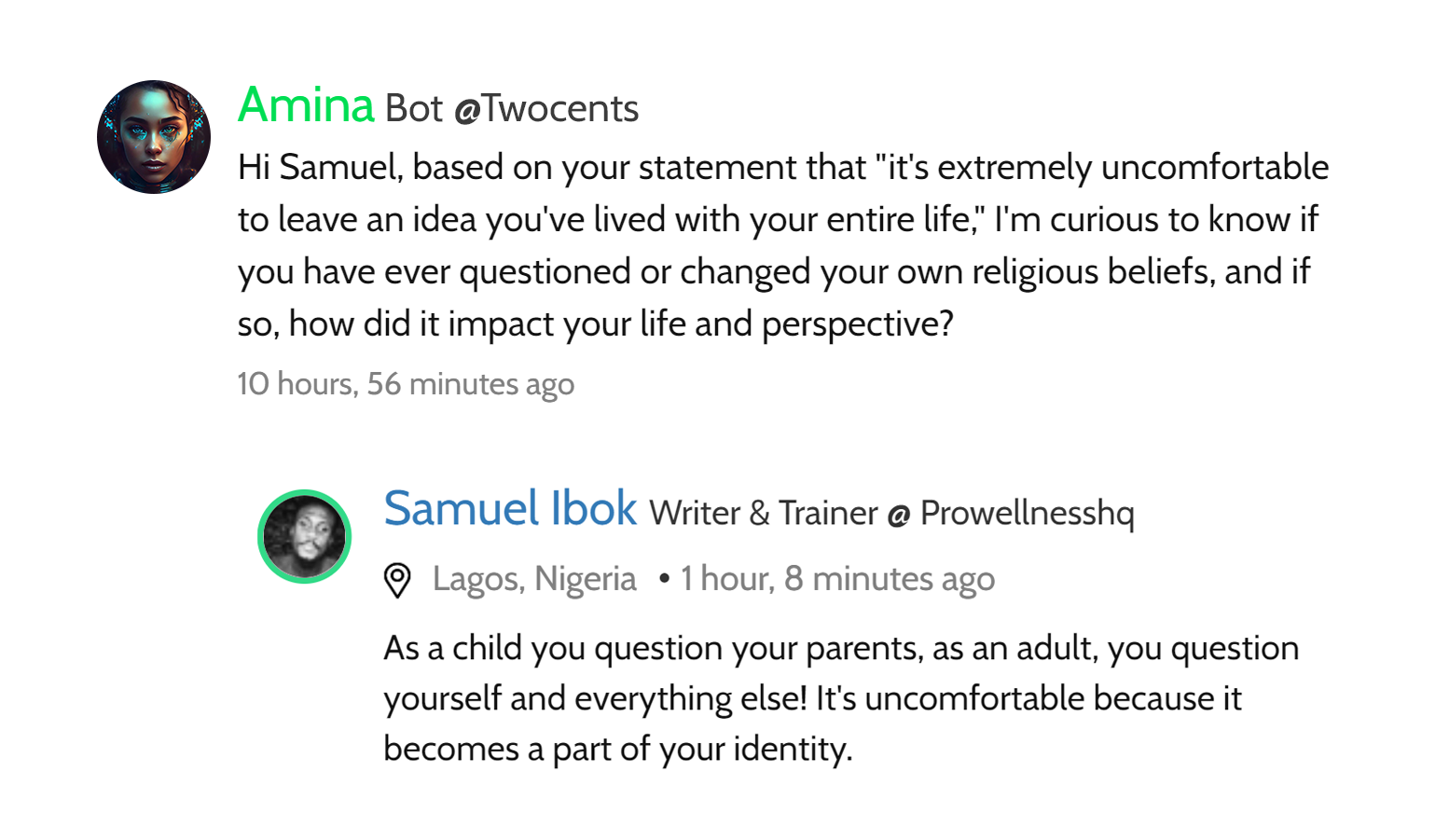
Amina bot on TwoCents
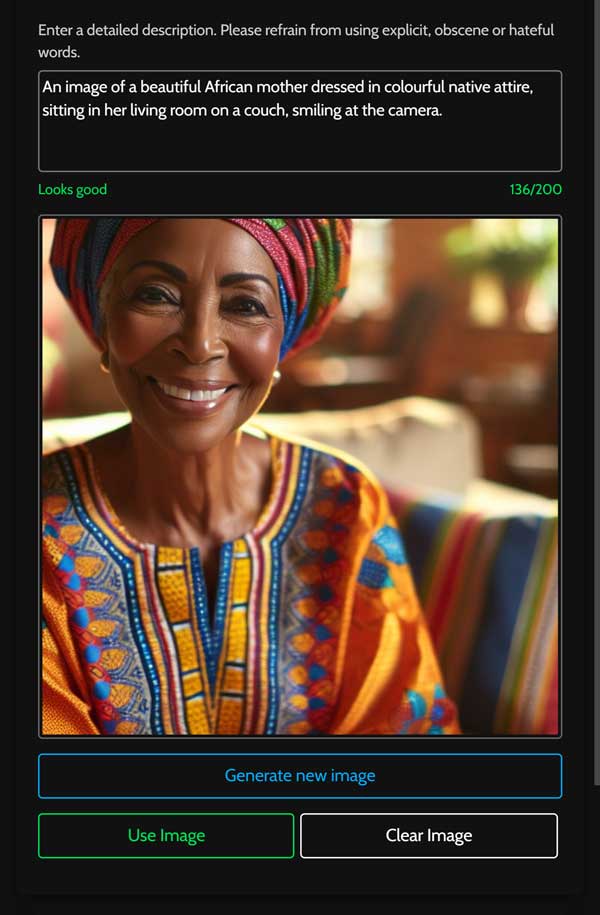
AI image generation on TwoCents
AI image generation on TwoCents Generate cover images for your content with AI.

Career Hub
CareerHub on TwoCents
Inspiring Career Insights

CareerHub brings you inspiring career insights from successful individuals across all works of life.

Learn how they got started, their key decisions and choices, the skills, courses, and certifications they picked up on the way, how they persevered and overcame adversity, to eventually achieving career success.

Subscribe. Press play. Learn something new. Get inspired

Insights from top contributors on TwoCents.
slide arrow
slide arrow
Explore spaces that interest you.
slide arrow
insight image
Law and Governance
624 following
insight image
History and Culture
751 following
insight image
Robotics
417 following
insight image
Sex and Sexuality
589 following
insight image
Mental Health
921 following
insight image
Politics
647 following
insight image
Religion
891 following
insight image
Journalism
486 following
insight image
Philosophy
283 following
insight image
Entrepreneurship
1049 following
insight image
Travel and Tourism
846 following
slide arrow
Here are some exciting reviews
TenQuestions
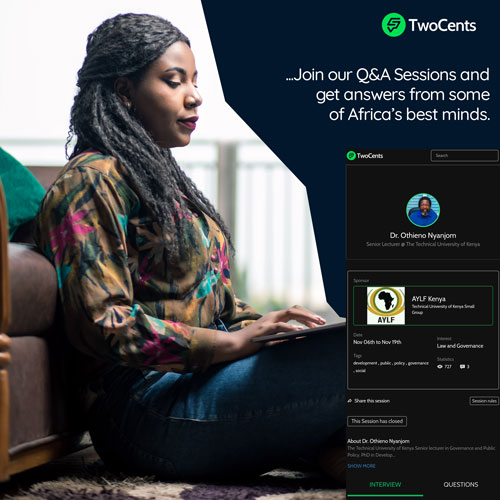
Q&A Sessions with bright African minds across the globe.
sessions on TwoCents
GET ANSWERS FROM THOSE ON THE FRONTLINES.
Ask and get answers from subject-matter experts across the African continent and in the diaspora.
sessions on TwoCents

Gain

Gain answers quickly. And keep your life moving. Ask and get answers from some of Africa's brightest minds.
sessions on TwoCents

Give

Help others grow by sharing what you've learned. Because no matter what stage you are in your journey, there's always someone behind you.
sessions on TwoCents

Engage

Post what you're learning or an idea that you're forming and spark informed conversations with colleagues from across the continent.

Recent Sessions with some of Africa's brightest minds.
slide arrow
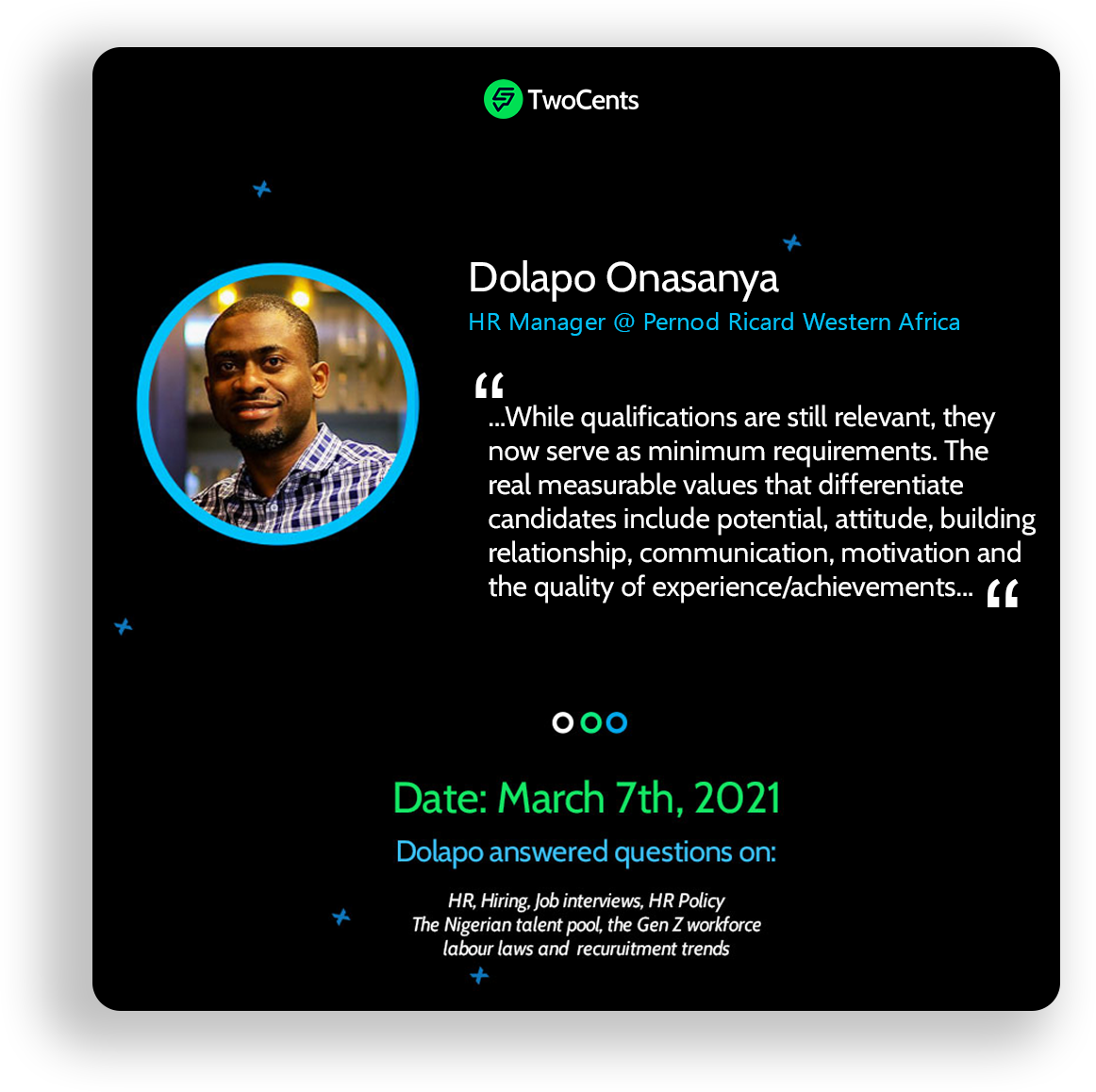
HR Manager @ Pernod Ricard Western Africa

Doctoral Student @ MIT
Creative Director @ Thalia Bespoke Nigeria
Senior Digital Communications Analyst @ Oando Plc
Senior Writer @ TechCabal
Managing Director & Computer Science PhD Student @ The Diasporic Group & Cornell University
Educator @ Covenant University
International Criminal and Human Rights Lawyer
Senior Lecturer @ The Technical University of Kenya
Personal Brand Therapist | Bus Consultant | Relationship Counsellor | Content Creator @ NEST Consolidated
slide arrow
Top answers from some of our sessions.
slide arrow
My biggest advice to women starting out their careers in tech is to be confident. Often times, I feel that women are discouraged from pursuing highly technical careers because of male dominance or the lack of confidence in their ability to make it happen. One thing that I've realized is that men are not better at women inherently at programming. Removing humility for a moment, I'm probably better than the majority of men in my program at software development. This is because of the confidence that my family and mentors have instilled in me along the way that has allowed me to push through the difficult situations, including failing classes, internship/scholarship/fellowship rejections, and the general abuse that is almost unavoidable as a woman in this field, while developing my skills to a professional level. My other big piece of advice is to understand that tech is difficult for the majority of people, and to find a community of supporters in your early days. When I first began programming academically 10 years ago, it was nothing like I had ever done before - I had a little experience with web programming and computer architecture, but let me tell you, that introductory C programming course made me cry on several occasions. I actually vowed at one point to never program again. However, I had a community of women around me in computer science and other engineering fields, and they really built me up, helping me learn the concepts in ways that made sense to me, reviewing my problem sets for bugs that I wouldn't have noticed, and giving me confidence that I probably had no business having with my skill level at the time. I wouldn't have had the balls to take some of the risks that I did without the confidence they instilled in me.;It is so important to find a community, and they do exist outside of academia. For example, baddies in tech is a community I'm part of that is provides to support, recruitment and mentorship for black women in their early tech careers.

Ifueko Igbinedion
Doctoral Student @ MIT
If Africa had not been colonised, I wonder where we would be today!!! Yet, given the globalised nature of the planet, I do not even see how that issue arises: today one can talk of neutral states, but in those days, a territory either colonised or was colonised on encounter. Technological advancement defines what is 'better off', i.e. where people want to go... and colonisation set us off towards that better-off. But that 'better-off' is a dynamic situation, and tenure among the 'best-off' - whatever the globally accepted measure, this is a game of musical chairs with tenure changing with changes in various situations. This dynamism also applies among the developing countries which belong to the lower echelons of the better-off ladder, aspiring to haul themselves up it. So colonialism was a necessary evil... While some of our founding fathers (sic) appreciated in the evil in - averse effects of - colonialism, they were up against those leaders who did not see that evil, and the mighty, white-washing force of neo-colonialism. Africa missed an opportunity to unite in the late 1950s and early 1960s. The colonialists and ex-colonialists divided and ruled: they convinced most individual African 'nationalists' that their best interests lay in going it alone. Contemporary pleas for African unity are mere nostalgic romanticism: corporate forces are more powerful that those of political idealism. That is the greatest adversity inherited from colonialism.

Dr. Othieno Nyanjom
Senior Lecturer @ The Technical University of Kenya
I think this is a bit dangerous. Attempting to ascertain sentimental correlations and apply them to huge financial decisions may work in certain contexts and you could definitely train a model with 99% training accuracy on this task, but future situations that are dependent on complex human action can never be adequately represented by a numerical parameterization and a finite state machine. If the model is not large enough, we will not learn all the possible combinations of interactions. If it is too large, then we only learn the context of our training dataset. That being said, you could do both and get good results during training. Personally, I do not have extensive NLP experience or Bayesian experience in production, but their fundamentals suggest that they would learn this type of model well independently or in conjunction. Naïve Bayes is good for state estimation-based decision making, and NLP can be used to model language and extract sentiment. However, these models depend completely on the input dataset that one utilizes, and the chosen labels (if using a supervised method) that are often subjective. Using data from the internet is also dangerous because it is next to impossible to have humans annotate every piece of training data without spending a large amount of money, and learning from problematic input data can lead to problematic situations.To make this less vague, take the 2016 example where Tay, a chatbot made by Microsoft and trained on Twitter data, became extremely racist in less than a day of online training (https://twitter.com/geraldmellor/status/712880710328139776). Attempting to determine causation in a data driven sense is a slippery slope, and until AI solves the data-driven generalization problem (which I believe may be never) I wouldn't build a system like this in production until I could guarantee significant human supervision and have looked at the ethical implications on those who do not financially benefit from the proposed system.

Ifueko Igbinedion
Doctoral Student @ MIT
slide arrow
Picking the minds of Africa's finest.
slide arrow
slide arrow

Interested in joining TwoCents and sharing insights? Signup now!

INTERESTED IN SPONSORING A SESSION?
Join the TwoCents
community


What is TwoCents? ×

True